



INTRODUCTION
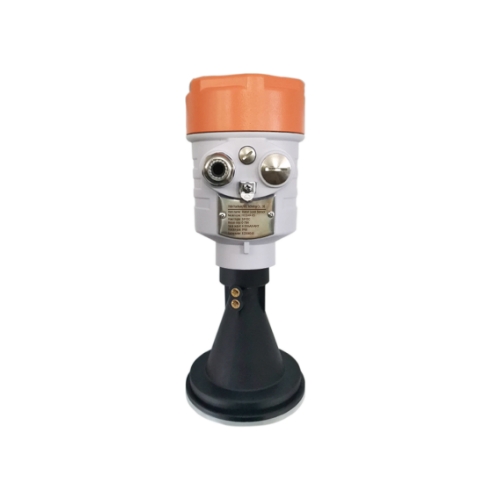
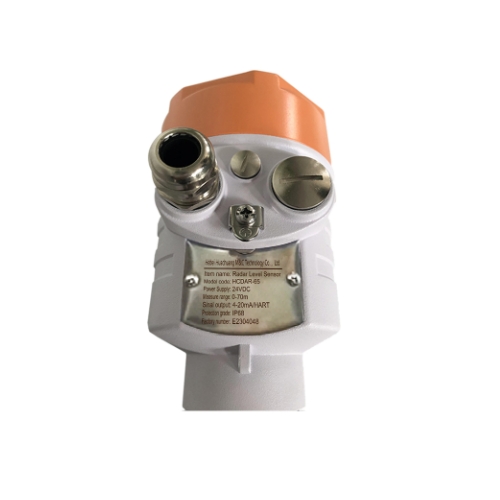
HCDAR-65 Radar Level Sensor for River, Reservoir, Lake & Tide Monitoring
- Application: River Channel, Reservoir, Lake, Tide
- Measuring Range: 0~70m
- Connection Process: Stents
- Medium Temperature: (-40~120)℃
- Process Pressure: Atmospheric Pressure
- Accuracy: ±5mm
- Signal Output: (4~20)mA HART/RS485 MODBUS
- Explosion-Proof Grade: Ex ia IIC T1-T6 Ga/Ex d IIC T6 Gb
- Protection Grade: IP68
- Frequency Range: 26 GHz
0~70m 26G Radar River Water Level Transmitter -40~120℃ Radar Water Level Sensor
HCDAR-6x series adopts non-contact measuring method, the output (4-20) mA/RS485 signal, max measuring range is 70m.
The antenna structure is further optimized, and the new microprocessor can perform higher-speed signal analysis and processing.
The instrument can be used in more complicated working conditions such as reactors or solid silos.
WORKING PRINCIPLE
The antenna of HCDAR-6x launches a narrow pulse electromagnetic wave, and electromagnetic wave is reflected back when reach the medium surface and received by the same antenna.
According to the two pulse interval, the microprocessor calculates the distance from the antenna to the surface of the measured medium, and convert it into material level signal.
FEATURE
HCDAR-6x series has small beam angles, and strong anti-interference ability, which improves measurement accuracy and reliability.
The antenna size is smaller, easy to install. It has small measuring blind zone and shorter wavelength.
HCDAR-6X has a good measurement effect for small tanks and small particles. Non-contact measurement, no wear, no pollution.
Output option: 2-wire (4-20 )mA HART and 4-wire RS485 Modbus.
HCDAR-65 Radar Level Sensor for River, Reservoir, Lake & Tide Monitoring
- HCDAR-61 Radar Level Sensor for Corrosive Liquids
- HCDAR-62 Radar Level Sensor for Liquid & Slurry
- HCDAR-63 Radar Level Sensor for Solid Particle & Powder
- HCDAR-64 Radar Level Sensor for Solid Material & Powder
- HCDAR-65 Radar Level Sensor for River, Reservoir, Lake & Tide Monitoring
- HCDAR-66 Radar Level Sensor for Liquid, Slurry & Dew Resistant
- HCDAR-67 Radar Level Sensor Liquid, Slurry, Steam, Condensation Occasions
HCDAR-65 Radar Level Sensor for River, Reservoir, Lake & Tide Monitoring – High Precision Water Level Monitoring by HCCK
Introduction to Advanced Water Level Monitoring Technology
Accurate water level monitoring has become increasingly critical in modern environmental management, flood prevention, hydrological research, and smart water infrastructure systems. Governments, environmental agencies, and industrial organizations require reliable monitoring solutions capable of delivering precise measurements in challenging outdoor environments such as rivers, reservoirs, lakes, and tidal zones.
The HCDAR-65 Radar Level Sensor, manufactured by HCCK (Hebei Huachuang M&C Technology Co., Ltd.), is an advanced radar-based water level measurement device designed specifically for hydrological monitoring applications. Utilizing cutting-edge non-contact radar technology, this sensor provides accurate, real-time water level measurements regardless of environmental conditions.
Unlike traditional level measurement methods that rely on mechanical floats, pressure sensors, or ultrasonic signals, the HCDAR-65 uses high-frequency radar signals to measure the distance between the sensor and the water surface. This approach ensures stable and precise measurements even in difficult conditions such as fog, rain, waves, temperature fluctuations, or strong winds.
The HCDAR-65 radar level sensor is widely used in applications such as river monitoring systems, reservoir management, flood early warning systems, lake level monitoring, and tidal measurement networks.
What is the HCDAR-65 Radar Level Sensor?
The HCDAR-65 Radar Level Sensor is a non-contact water level monitoring device specifically designed for environmental and hydrological monitoring applications.
It works by transmitting radar waves toward the water surface and analyzing the reflected signal to determine the distance between the sensor and the water surface. This distance measurement is then converted into an accurate water level reading.
Because radar signals are unaffected by environmental conditions such as humidity, temperature, or weather, the HCDAR-65 provides highly reliable measurements in outdoor environments where other technologies often fail.
The sensor is optimized for use in:
-
Rivers
-
Reservoirs
-
Lakes
-
Coastal tide monitoring stations
-
Flood monitoring systems
-
Water resource management systems
-
Smart hydrological monitoring networks
The robust industrial design ensures long-term operation in remote locations where maintenance access may be limited.
Key Features of HCDAR-65 Radar Level Sensor
Non-Contact Radar Measurement Technology
The HCDAR-65 uses advanced radar wave technology to measure water levels without any physical contact with the liquid surface. This design eliminates common issues associated with traditional sensors such as corrosion, contamination, sediment buildup, or mechanical wear.
Because the sensor is mounted above the water surface, it remains protected from debris, floating materials, and harsh water conditions.
High Precision Water Level Monitoring
One of the most important advantages of the HCDAR-65 radar level sensor is its exceptional measurement accuracy.
The device delivers highly stable readings even when water surfaces are turbulent due to waves, wind, or heavy rainfall. Advanced signal processing algorithms filter environmental noise to ensure precise and consistent measurement results.
This level of accuracy is essential for applications such as flood monitoring systems, reservoir capacity management, and hydrological research.
Reliable Operation in Harsh Outdoor Environments
Outdoor monitoring environments present numerous challenges, including extreme temperatures, humidity, dust, storms, and changing weather conditions.
The HCDAR-65 radar level sensor is engineered with industrial-grade durability, making it capable of operating reliably in challenging outdoor installations.
The sensor housing is built using corrosion-resistant materials designed for long-term exposure to environmental elements.
Ideal for Long-Distance Water Level Measurement
Radar technology allows the HCDAR-65 sensor to measure water levels across significant distances while maintaining measurement accuracy.
This makes the sensor particularly suitable for installations such as:
-
High bridges over rivers
-
Reservoir monitoring towers
-
Dam infrastructure
-
Coastal monitoring stations
Even at greater measurement ranges, the sensor continues to provide stable and precise readings.
Low Maintenance Requirements
Because the HCDAR-65 radar sensor operates without physical contact with the water, it requires minimal maintenance compared to traditional measurement devices.
There are no moving parts, floats, or submerged sensors that could become damaged or clogged.
This significantly reduces maintenance costs and improves long-term operational reliability.
Real-Time Data Integration
The HCDAR-65 can be integrated into modern monitoring systems that require real-time water level data transmission.
It supports various industrial communication protocols used in:
-
SCADA systems
-
Smart city infrastructure
-
Environmental monitoring networks
-
Flood early warning systems
-
Water management platforms
The ability to transmit continuous real-time data makes it a powerful tool for automated monitoring and decision-making systems.
Technical Advantages of Radar Level Measurement Technology
Radar-based measurement technology offers several advantages compared to alternative level sensing methods.
Compared to Ultrasonic Sensors
Ultrasonic sensors rely on sound waves, which can be affected by environmental conditions such as temperature changes, humidity, fog, and wind.
Radar sensors like the HCDAR-65 are far less sensitive to these factors, providing more reliable measurements.
Compared to Pressure Sensors
Pressure-based water level sensors must be submerged in water, making them susceptible to sediment buildup, corrosion, and biological contamination.
The HCDAR-65 radar sensor avoids these issues by measuring levels from above the water surface.
Compared to Float Sensors
Mechanical float sensors contain moving parts that can wear out over time or become stuck due to debris or algae.
Radar technology eliminates mechanical components, improving reliability and reducing maintenance needs.
Why Choose HCCK (Hebei Huachuang M&C Technology Co., Ltd.)
HCCK (Hebei Huachuang M&C Technology Co., Ltd.) is a leading manufacturer of industrial measurement instruments and monitoring solutions.
The company specializes in advanced sensor technologies designed for industries including environmental monitoring, water management, industrial automation, and smart infrastructure.
Key advantages of choosing HCCK include:
-
Advanced radar measurement technology
-
High-quality industrial sensor manufacturing
-
Strict quality control standards
-
Global distribution capabilities
-
Professional technical support
HCCK products are trusted by engineers and system integrators worldwide for their reliability and precision.
Installation of HCDAR-65 Radar Level Sensor
Installation of the HCDAR-65 radar level sensor is simple and flexible.
The sensor is typically mounted above the water surface using structures such as:
-
Bridges
-
Monitoring towers
-
Dam infrastructure
-
Mounting brackets
-
Poles or platforms
Proper installation ensures that the radar beam is directed toward the water surface without obstruction.
Once installed, the sensor can be connected to monitoring systems for continuous data collection.
Benefits of Using HCDAR-65 for Hydrological Monitoring
Organizations that implement the HCDAR-65 radar level sensor gain several operational advantages.
Improved Flood Risk Management
Accurate real-time water level monitoring allows authorities to respond quickly to rising water levels and reduce flood risks.
Reliable Long-Term Monitoring
The sensor’s durable design ensures consistent performance over long operational periods.
Reduced Maintenance Costs
Non-contact measurement eliminates the need for frequent maintenance and sensor replacement.
Enhanced Environmental Data Accuracy
Reliable water level data improves hydrological research and environmental monitoring programs.
Frequently Asked Questions (FAQ)
What is a radar level sensor?
A radar level sensor is a device that measures the distance between the sensor and a liquid or solid surface using radar signals. The reflected signal is used to calculate the level of the material being measured.
Is radar level measurement suitable for outdoor environments?
Yes. Radar level sensors are ideal for outdoor applications because radar signals are not affected by weather conditions such as rain, fog, wind, or temperature fluctuations.
Can the HCDAR-65 be used for flood monitoring?
Yes. The HCDAR-65 radar level sensor is widely used in flood early warning systems because it provides reliable real-time water level data.
Does the sensor require frequent maintenance?
No. Because it uses non-contact radar technology, the HCDAR-65 requires very little maintenance compared to traditional sensors.
What environments is the HCDAR-65 designed for?
The HCDAR-65 radar level sensor is specifically designed for:
-
Rivers
-
Reservoirs
-
Lakes
-
Tidal monitoring stations
-
Environmental monitoring systems
Conclusion
The HCDAR-65 Radar Level Sensor for River, Reservoir, Lake & Tide Monitoring from HCCK (Hebei Huachuang M&C Technology Co., Ltd.) represents a powerful solution for modern hydrological monitoring systems.
With its non-contact radar technology, high precision measurement capability, durability in harsh environments, and low maintenance requirements, the HCDAR-65 provides reliable and accurate water level monitoring for a wide range of environmental applications.
Whether used for flood monitoring, reservoir management, lake observation, or tidal measurement, this advanced radar level sensor delivers the performance required for today’s smart water infrastructure.
Organizations seeking dependable water level monitoring technology can benefit greatly from integrating the HCDAR-65 radar level sensor into their monitoring systems.


 PT Totalitas Teknik Indonesia
 PT Totalitas Teknik Indonesia
 PT Totalitas Teknik Indonesia
