INTRODUCTION
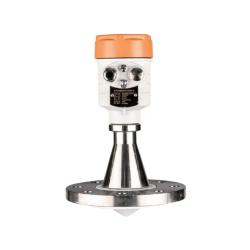
HCDAR-51 Radar Level Sensor for Solid Particle, Powder & Liquid
- Application: Solids, Powders
- Liquids Measuring Range:0~30 m Connection Process:Thread
- Flange Medium Temperature:(-40~250) ℃ Process Pressure:(-0.1~2) MPa Accuracy:±3 mm Signal
IP68 0-30m Guided Wave Radar Level Sensor 4~20 mA HART Radar Level Transmitter
The guided wave radar level transmitter is used for liquids, solid particles, and small-sized oil tanks, as well as various conductive and non-conductive mediums, such as coal bunkers, ash bins, and oil tanks. It provides continuous measurement of the level of liquids, particles, and slurries. The measurement is not affected by medium type, temperature, inert gas, steam, dust, foam, and so on. Its accuracy can reach 3mm, with a measuring range of up to 30 meters, high temperature resistance of 250 degrees Celsius, and high pressure resistance of 20 kgf.
HCDAR-5x series adopts the contact measurement method and can be used for the continuous level measurement of liquid, solid particles, small size oil storage tanks, offers continuously measurement of the level of conductive and non-conductive liquids, particles and slurries. The measurement won’t be affected by medium type, pressure, temperature, inert gas, steam, dust and foam, etc. The accuracy could reach to 3mm, max measuring range can be 30m, high temperature resistance could be 250℃ and high pressure resistance can be 2MPa.
WORKING PRINCIPLE
HCDAR-5X series is a level measuring instrument based on time travel principle.
The electromagnetic wave emitted by the radar antenna propagates along the cable or rod probe.
When the pulse reaches the surface of the material, it is reflected back and received by the antenna.
The distance signal is converted to level signal.
The distance D to the material surface and the pulse travl time T is proportional: D=C*T/2. Where C is the speed of light, and the level of solid/liquid is obtained.
FEATURE
HCDAR-5X guided wave radar level transmitter emit constant electromagnetic wave, and there is no need for on-site calibration and migration to change the range. The installation method is simple and diverse, and the measurement will not be affected by temperature, pressure, density changes. HCDAR-5X series have no moving parts, so there is no mechanical parts damage problem and no need for maintenance. Almost all liquid and solid particle media can be measured.
HCDAR-51 Radar Level Sensor for Solid Particle, Powder & Liquid
HCDAR-51 Radar Level Sensor – Advanced Industrial Level Measurement for Solid, Powder, and Liquid
Introduction to High-Precision Radar Level Measurement Technology
Accurate level measurement plays a critical role in modern industrial operations. Industries such as chemicals, food processing, mining, manufacturing, and energy rely on precise monitoring systems to ensure safe storage, efficient production processes, and optimized inventory management.
The HCDAR-51 Radar Level Sensor is a high-performance industrial measurement device designed to deliver reliable and precise level monitoring for solid particles, powders, and liquids. Developed by HCCK, a leading instrumentation brand from Hebei Huachuang M&C Technology Co., Ltd., this radar level sensor integrates advanced microwave radar technology with intelligent signal processing to provide accurate measurements even in challenging industrial environments.
Unlike traditional level measurement technologies, the HCDAR-51 uses non-contact radar sensing, which eliminates mechanical wear and minimizes maintenance requirements. This makes it an ideal solution for continuous industrial operations where reliability and long-term performance are essential.
With its ability to measure liquids, powders, and solid particles, the HCDAR-51 radar level sensor offers a versatile solution for various industrial applications.
- HCDAR-51 Radar Level Sensor for Solid Particle, Powder & Liquid
- HCDAR-52 Radar Level Sensor for Solid Particle, Powder & Liquid
- HCDAR-56 Radar Level Sensor
- HCUS-300 Ultrasonic Level Transmitter HART
- HCUS-400 Ultrasonic Level Transmitter HCCK
- HCUS-500 Ultrasonic Level Transmitter (Explosion Proof)
- HCDB-30 Submersible Hydrostatic Level Transmitter
- HCDB-50 Submersible Hydrostatic Level Transmitter
- HCDB-51 Submersible Hydrostatic Level Transmitter
- HCDB-60 Deep Well Liquid Level Transmitter
Understanding Radar Level Sensor Technology
Radar level sensors have become one of the most reliable technologies for industrial level measurement. The HCDAR-51 sensor uses high-frequency microwave radar signals to detect the distance between the sensor and the material surface.
The operating principle involves three main steps:
-
The radar sensor emits microwave signals toward the surface of the material.
-
The signal reflects back from the material surface.
-
The sensor analyzes the time delay of the reflected signal to calculate the precise distance.
This technology provides extremely accurate results and works effectively even when the environment includes:
-
Dust or powder clouds
-
Vapor or steam
-
Foam on liquid surfaces
-
Unevensolid surfaces
-
Temperature variations
Because the measurement is non-contact, the sensor does not physically touch the material being measured. This significantly increases reliability and reduces operational maintenance.
Key Features of the HCDAR-51 Radar Level Sensor
The HCDAR-51 Radar Level Sensor is engineered to meet the demanding requirements of modern industrial monitoring systems.
High Measurement Accuracy
One of the most important advantages of the HCDAR-51 radar sensor is its high level of measurement accuracy. Advanced radar signal processing ensures that measurements remain stable even in complex environments.
This allows industrial operators to monitor material levels with confidence and maintain precise control over production processes.
Non-Contact Radar Measurement
The HCDAR-51 operates using non-contact radar technology, which means the sensor does not physically interact with the material inside the tank or silo.
Key benefits of this design include:
-
Reduced mechanical wear
-
Longer service life
-
Lower maintenance requirements
-
Improved reliability in corrosive environments
This makes radar sensors superior to traditional mechanical or float-based level measurement devices.
Multi-Material Compatibility
Another major advantage of the HCDAR-51 radar level sensor is its ability to measure multiple types of materials.
The sensor can accurately monitor levels of:
-
Solid particles
-
Bulk powders
-
Granular materials
-
Industrial liquids
-
Chemical solutions
This versatility makes it suitable for a wide range of industrial sectors.
Excellent Performance in Challenging Environments
Industrial environments can often interfere with conventional measurement technologies. Dust, steam, temperature changes, and complex material surfaces can create challenges for traditional sensors.
The HCDAR-51 radar sensor is designed to perform reliably in these environments. The radar signal can penetrate dust and vapor, ensuring consistent measurement accuracy even under difficult conditions.
Industrial Applications of HCDAR-51 Radar Level Sensor
The HCDAR-51 Radar Level Sensor is widely used across industries where accurate level measurement is essential for safety and operational efficiency.
Chemical Industry
Chemical processing plants rely heavily on accurate monitoring of liquid chemicals stored in tanks. The HCDAR-51 radar level sensor provides precise measurement for solvents, acids, and other chemical fluids.
Its non-contact design also prevents contamination and ensures safe operation in corrosive environments.
Powder and Bulk Material Storage
Many industries store powders or granular materials in silos. Examples include cement, flour, plastic pellets, and grain.
The HCDAR-51 radar level meter can measure these materials accurately despite dust or uneven material surfaces.
Oil and Liquid Storage Facilities
Large storage tanks used in oil, fuel, and industrial liquid storage require reliable monitoring systems.
The radar technology used in the HCDAR-51 ensures stable measurements even when liquid surfaces are affected by foam, turbulence, or vapor.
Food and Beverage Processing
Food manufacturing facilities frequently handle ingredients in both powder and liquid form.
Radar level sensors are ideal for monitoring these materials because they provide hygienic, non-contact measurement.
Mining and Cement Industries
Mining and cement production involve large quantities of bulk materials stored in silos or containers.
The HCDAR-51 radar level sensor helps operators maintain efficient material handling and inventory management.
Advantages of Radar Level Sensors Compared to Other Technologies
Radar level measurement technology offers several advantages compared with other level measurement methods such as ultrasonic, float, or pressure-based sensors.
Higher Accuracy
Radar sensors deliver highly precise measurements regardless of environmental conditions.
Minimal Maintenance
Because radar sensors have no moving parts and operate without contact with the material, they require significantly less maintenance.
Reliable Operation in Harsh Environments
Radar signals can penetrate dust, vapor, and foam, making them more reliable than ultrasonic sensors in challenging environments.
Longer Service Life
The absence of mechanical components means radar sensors typically last much longer than traditional level measurement devices.
Why Choose HCCK Radar Level Sensors?
Industrial companies around the world trust HCCK measurement solutions developed by Hebei Huachuang M&C Technology Co., Ltd..
The company has built a strong reputation for delivering high-quality industrial instrumentation and measurement technologies.
Key advantages of choosing HCCK include:
-
Advanced radar sensing technology
-
High manufacturing standards
-
Strict quality control processes
-
Long-term industrial reliability
-
Global supply capabilities
HCCK continuously invests in research and development to create next-generation measurement solutions for modern industry.
Installation and Integration
The HCDAR-51 Radar Level Sensor is designed for easy installation and integration into industrial monitoring systems.
Typical installation locations include:
-
Storage tanks
-
Industrial silos
-
Process vessels
-
Chemical containers
-
Bulk material storage facilities
The sensor can be connected to industrial control systems for real-time monitoring and automated process management.
Maintenance and Long-Term Reliability
One of the major advantages of radar level sensors is their minimal maintenance requirement.
Since the HCDAR-51 uses non-contact measurement technology, it does not suffer from mechanical wear or material buildup.
Routine maintenance typically involves:
-
Periodic visual inspection
-
Calibration checks
-
Signal verification
This results in lower operational costs and higher system reliability.
Global Demand for Radar Level Sensors
As industries continue to adopt automation and smart monitoring systems, the demand for radar level sensors continues to grow worldwide.
Radar sensors are increasingly used in:
-
Industrial automation systems
-
Smart manufacturing facilities
-
Bulk material logistics
-
Energy and resource management
Products such as the HCDAR-51 radar level sensor play a key role in improving efficiency, safety, and process control in modern industrial environments.
Conclusion
The HCDAR-51 Radar Level Sensor represents a powerful and reliable solution for industrial level measurement of solid particles, powders, and liquids.
With advanced radar technology, high accuracy, and durable industrial design, the sensor delivers consistent performance even in challenging environments.
Developed by HCCK from Hebei Huachuang M&C Technology Co., Ltd., the HCDAR-51 radar level meter is an ideal choice for industries seeking accurate, reliable, and low-maintenance level measurement technology.
Whether used in chemical processing, bulk material storage, food production, or mining operations, the HCDAR-51 provides the performance and reliability required for modern industrial monitoring systems.


 PT Totalitas Teknik Indonesia
 PT Totalitas Teknik Indonesia
 PT Totalitas Teknik Indonesia